
This site is intended for US healthcare professionals only.

Dosing and Titration


Titration steps

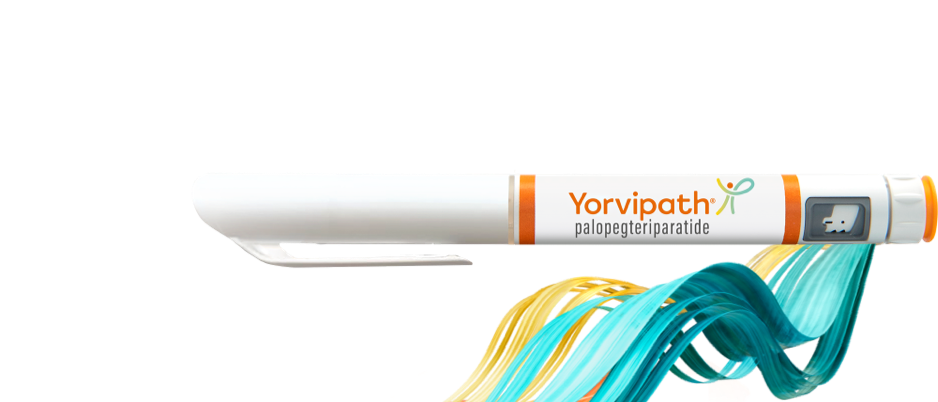
YORVIPATH pen

Dosing and titrating YORVIPATH is carried out in 4 Steps1

The goal of titrating YORVIPATH is to maintain normal serum calcium levels while achieving independence from conventional therapy.1*

Number one
EVALUATE1

Measurement icon
  • Within 14 days before the first dose, ensure your patient’s:
    • Albumin-corrected serum calcium is ≥7.8 mg/dL
    • Serum 25(OH) vitamin D is within normal range
Number two
INITIATE1

YORVIPATH logo mark icon
  • Recommended starting dose is 18 mcg once daily
    • Average dose in the Phase 3 clinical trial was 21 mcg at Week 262
    • Maximum recommended dosage is 30 mcg daily
  • Do not discontinue active vitamin D and calcium at the same time
    • Patients should first be titrated off active vitamin D before beginning to titrate oral calcium down to independence or lowest dose

Active vitamin D (calcitriol) and calcium dose adjustments upon YORVIPATH initiation or up-titration if taking active vitamin D1


Measure albumin-corrected serum calcium

If albumin-corrected serum calcium ≥ 8.3 mg/dL:

arrow connection line connection line

Active vitamin D >1 mcg/day

Reduce dose of active vitamin D by ≥50% and maintain current calcium dose

Active vitamin D ≤1 mcg/day

Discontinue active vitamin D and maintain current calcium dose

If albumin-corrected serum calcium <8.3 mg/dL:

arrow connection line connection line

Reduce dose of active vitamin D by ≥50% and maintain current calcium dose

If calcium supplements are needed to meet dietary requirements, continuing dietary calcium supplements at elemental doses ≤ 600 mg/day may be considered instead of discontinuing entirely.1

Number three icon
TITRATE1†

Titration icon
  • Measure serum calcium 7 to 10 days after first YORVIPATH dose and after any dose adjustments in YORVIPATH, active vitamin D, or calcium
  • Adjust YORVIPATH in 3-mcg increments or decrements to meet individual needs
  • Continue to titrate calcium and vitamin D until patients achieve independence from, or reach the lowest dose of, conventional therapy

The YORVIPATH dose should not be1:

Increased dose icon

Increased more often than every 7 days

Decrease dosage icon

Decreased more often than every 3 days

  • Serum calcium should be measured within 7 to 10 days after the first dose and any dose change in YORVIPATH, active vitamin D, or calcium1
    • Use the Titration Calculator for titration of YORVIPATH, active vitamin D, and/or calcium. Continue to titrate until patients achieve independence from (or reach the lowest dose of) conventional therapy to maintain serum calcium in the normal range.
    • Monitor patients for clinical symptoms of hypocalcemia or hypercalcemia
* Independence from conventional therapy was defined as requiring no active vitamin D and ≤600 mg/day of calcium supplementation.1
† Please see the full Prescribing Information for complete titration instructions.
Number four icon
MAINTAIN1

Titration icon
  • Once the YORVIPATH maintenance dose is achieved, measure serum calcium at a minimum of every 4 to 6 weeks or as indicated for symptoms of hypocalcemia or hypercalcemia
  • If calcium levels remain low at 30 mcg/day, consider adding or restarting calcium and/or active vitamin D therapy

Titration algorithm

Albumin-corrected serum calcium low (<8.3 mg/dL)1

low serum calcium titration table

Albumin-corrected serum calcium normal (8.3 to 10.6 mg/dL)1

normal calcium serum titration table
† If dose of active vitamin D is >1 mcg/day, reduce dose by ≥50% and maintain current calcium dose. If dose of active vitamin D is ≤1 mcg/day, discontinue active vitamin D and maintain current calcium dose.1

Albumin-corrected serum calcium high (10.7 to 11.9 mg/dL)1

high calcium serum titration table
† If dose of active vitamin D is >1 mcg/day, reduce dose by ≥50% and maintain current calcium dose. If dose of active vitamin D is ≤1 mcg/day, discontinue active vitamin D and maintain current calcium dose.1

Albumin-corrected serum calcium very high (≥12 mg/dL)1

very high calcium serum titration table

The full titration algorithm can also be found in the YORVIPATH Start Guide.

Download Start Guide
Doctor Warren

See Dr. Mark Warren present an overview of dosing and titrating YORVIPATH.

Watch video

Dr. Mark Warren, Associate Professor, Campbell University School of Medicine Director of Clinical Trials and Laboratory Services, Physicians East, PA

Guide icon

This guide can help with dosing and titrating YORVIPATH for your patients

Download guide

See also

Start a patient icon

Start a patient on YORVIPATH

Start a patient
Patient and cost resources icon

Support is available for you, your staff, and your patients

View resources
close isi icon open isi icon

Important Safety Information

CONTRAINDICATIONS

YORVIPATH is contraindicated in patients with a history of severe hypersensitivity to palopegteriparatide or any of the inactive ingredients of YORVIPATH. Reactions have included anaphylaxis, angioedema, and urticaria.

WARNINGS AND PRECAUTIONS

Hypersensitivity Reactions

Hypersensitivity reactions, including anaphylaxis, angioedema, and urticaria have been reported in patients treated with parathyroid hormone (PTH) analogs, including YORVIPATH. If signs or symptoms of a hypersensitivity reaction occur, discontinue treatment with YORVIPATH, initiate appropriate supportive care, and monitor until signs and symptoms resolve. Discontinue YORVIPATH permanently in patients with a severe hypersensitivity reaction to YORVIPATH. YORVIPATH is contraindicated in patients with a history of severe hypersensitivity to palopegteriparatide or any of the inactive ingredients of YORVIPATH.

INDICATION AND LIMITATIONS OF USE

YORVIPATH (palopegteriparatide) is indicated for the treatment of hypoparathyroidism in adults.

  • YORVIPATH was not studied for acute post-surgical hypoparathyroidism.
  • YORVIPATH’s titration scheme was only evaluated in adults who first achieved an albumin-corrected serum calcium of at least 7.8 mg/dL using calcium and active vitamin D treatment.

Risk of Unintended Changes in Serum Calcium Levels Related to Number of Daily Injections

Use only one YORVIPATH injection to achieve the recommended once daily dosage. Using two YORVIPATH injections to achieve the recommended once daily dosage increases the variability of the total delivered dose, which can cause unintended changes in serum calcium levels, including hypercalcemia and hypocalcemia.

Serious Hypercalcemia

Serious events of hypercalcemia requiring hospitalization have been reported with YORVIPATH. The risk is highest when starting or increasing the dose of YORVIPATH but may occur at any time. Measure serum calcium 7 to 10 days after any dose change or if there are signs or symptoms of hypercalcemia, and at a minimum of every 4 to 6 weeks once the maintenance dose is achieved. Treat hypercalcemia if needed. If albumin-corrected serum calcium is greater than 12 mg/dL, withhold YORVIPATH for at least 2-3 days. For less serious hypercalcemia, adjust the dose of YORVIPATH, active vitamin D, and/or calcium supplements.

Serious Hypocalcemia

Serious events of hypocalcemia have been observed with PTH products, including YORVIPATH. The risk is highest when YORVIPATH is abruptly discontinued, but may occur at any time, even in patients who have been on stable doses of YORVIPATH. Measure serum calcium 7 to 10 days after any dose change or if there are signs or symptoms of hypocalcemia, and at a minimum of every 4 to 6 weeks once the maintenance dosage is achieved. Treat hypocalcemia if needed, and adjust the dose of YORVIPATH, active vitamin D, and/or calcium supplements if hypocalcemia occurs.

Potential Risk of Osteosarcoma

YORVIPATH is a PTH analog. An increased incidence of osteosarcoma (a malignant bone tumor) has been reported in male and female rats treated with PTH analogs, including teriparatide. Osteosarcoma occurrence in rats is dependent on teriparatide or PTH dose and treatment duration. Osteosarcoma has been reported in patients treated with teriparatide in the postmarketing setting; however, an increased risk of osteosarcoma has not been observed in observational studies in humans. There are limited data assessing the risk of osteosarcoma beyond 2 years of teriparatide use.

YORVIPATH is not recommended in patients who are at increased risk of osteosarcoma, such as patients with:

  • Open epiphyses. YORVIPATH is not approved in pediatric patients.
  • Metabolic bone diseases other than hypoparathyroidism, including Paget’s disease of bone.
  • Unexplained elevations of alkaline phosphatase.
  • Bone metastases or a history of skeletal malignancies.
  • History of external beam or implant radiation therapy involving the skeleton.
  • Hereditary disorders predisposing to osteosarcoma.

Instruct patients to promptly report clinical symptoms (e.g., persistent localized pain) and signs (e.g., soft tissue mass tender to palpation) that could be consistent with osteosarcoma.

Orthostatic Hypotension

Orthostatic hypotension has been reported with YORVIPATH. Associated signs and symptoms may include decreased blood pressure, dizziness (including postural dizziness), palpitations, tachycardia, presyncope, or syncope. Such symptoms can be managed by dosing at bedtime, while reclining. YORVIPATH should be administered initially when the patient can sit or lie down due to the potential of orthostatic hypotension.

Risk of Digoxin Toxicity With Concomitant Use of Digitalis Compounds

YORVIPATH increases serum calcium, and therefore, concomitant use with digoxin (which has a narrow therapeutic index) may predispose patients to digitalis toxicity if hypercalcemia develops. Digoxin efficacy may be reduced if hypocalcemia is present. When YORVIPATH is used concomitantly with digoxin, measure serum calcium and digoxin levels routinely, and monitor for signs and symptoms of digoxin toxicity. Refer to the digoxin prescribing information for dose adjustments, if needed.


ADVERSE REACTIONS

The most common adverse reactions (≥ 5%) in patients treated with YORVIPATH and with ≥2% higher frequency compared to placebo were injection site reactions (39%), vasodilatory signs and symptoms (28%), headache (21%), diarrhea (10%), back pain (8%), hypercalcemia (8%) and oropharyngeal pain (7%).

DRUG INTERACTIONS

Drugs Affected by Serum Calcium

Digoxin: YORVIPATH increases serum calcium, therefore, concomitant use with digoxin (which has a narrow therapeutic index) may predispose patients to digitalis toxicity if hypercalcemia develops. Digoxin efficacy may be reduced if hypocalcemia is present. When YORVIPATH is used concomitantly with digoxin, measure serum calcium and digoxin levels, and monitor for signs and symptoms of digoxin toxicity. Adjustment of the digoxin and/or YORVIPATH dose may be needed.

Drugs Known to Affect Serum Calcium

Drugs that affect serum calcium may alter the therapeutic response to YORVIPATH. Measure serum calcium more frequently when YORVIPATH is used concomitantly with these drugs, particularly after these drugs are initiated, discontinued, or dose adjusted.

USE IN SPECIFIC POPULATIONS

Pregnancy

Available data from reports of pregnancies in the clinical trials from drug development are insufficient to identify a drug-associated risk of major birth defects, miscarriage, or other adverse maternal or fetal outcomes. If YORVIPATH is administered during pregnancy, or if a patient becomes pregnant while receiving YORVIPATH, healthcare providers should report YORVIPATH exposure by calling 1‑877‑229‑2184.

Lactation

Monitor infants breastfed by females treated with YORVIPATH for symptoms of hypercalcemia or hypocalcemia. Consider monitoring serum calcium in the breastfed infant.

You are encouraged to report side effects to FDA at (800) FDA-1088 or www.fda.gov/medwatch. You may also report side effects to Ascendis Pharma at 1‑844‑442‑7236.

Please click here for full Prescribing Information for YORVIPATH.

INDICATION AND LIMITATIONS OF USE

close isi icon open isi icon

YORVIPATH (palopegteriparatide) is indicated for the treatment of hypoparathyroidism in adults.

  • YORVIPATH was not studied for acute post-surgical hypoparathyroidism.
  • YORVIPATH’s titration scheme was only evaluated in adults who first achieved an albumin-corrected serum calcium of at least 7.8 mg/dL using calcium and active vitamin D treatment.

Important Safety Information

close isi icon open isi icon

CONTRAINDICATIONS

YORVIPATH is contraindicated in patients with a history of severe hypersensitivity to palopegteriparatide or any of the inactive ingredients of YORVIPATH. Reactions have included anaphylaxis, angioedema, and urticaria.

WARNINGS AND PRECAUTIONS

Hypersensitivity Reactions

Hypersensitivity reactions, including anaphylaxis, angioedema, and urticaria have been reported in patients treated with parathyroid hormone (PTH) analogs, including YORVIPATH. If signs or symptoms of a hypersensitivity reaction occur, discontinue treatment with YORVIPATH, initiate appropriate supportive care, and monitor until signs and symptoms resolve. Discontinue YORVIPATH permanently in patients with a severe hypersensitivity reaction to YORVIPATH. YORVIPATH is contraindicated in patients with a history of severe hypersensitivity to palopegteriparatide or any of the inactive ingredients of YORVIPATH.

Risk of Unintended Changes in Serum Calcium Levels Related to Number of Daily Injections

Use only one YORVIPATH injection to achieve the recommended once daily dosage. Using two YORVIPATH injections to achieve the recommended once daily dosage increases the variability of the total delivered dose, which can cause unintended changes in serum calcium levels, including hypercalcemia and hypocalcemia.

Serious Hypercalcemia

Serious events of hypercalcemia requiring hospitalization have been reported with YORVIPATH. The risk is highest when starting or increasing the dose of YORVIPATH but may occur at any time. Measure serum calcium 7 to 10 days after any dose change or if there are signs or symptoms of hypercalcemia, and at a minimum of every 4 to 6 weeks once the maintenance dose is achieved. Treat hypercalcemia if needed. If albumin-corrected serum calcium is greater than 12 mg/dL, withhold YORVIPATH for at least 2-3 days. For less serious hypercalcemia, adjust the dose of YORVIPATH, active vitamin D, and/or calcium supplements.

Serious Hypocalcemia

Serious events of hypocalcemia have been observed with PTH products, including YORVIPATH. The risk is highest when YORVIPATH is abruptly discontinued, but may occur at any time, even in patients who have been on stable doses of YORVIPATH. Measure serum calcium 7 to 10 days after any dose change or if there are signs or symptoms of hypocalcemia, and at a minimum of every 4 to 6 weeks once the maintenance dosage is achieved. Treat hypocalcemia if needed, and adjust the dose of YORVIPATH, active vitamin D, and/or calcium supplements if hypocalcemia occurs.

Potential Risk of Osteosarcoma

YORVIPATH is a PTH analog. An increased incidence of osteosarcoma (a malignant bone tumor) has been reported in male and female rats treated with PTH analogs, including teriparatide. Osteosarcoma occurrence in rats is dependent on teriparatide or PTH dose and treatment duration. Osteosarcoma has been reported in patients treated with teriparatide in the postmarketing setting; however, an increased risk of osteosarcoma has not been observed in observational studies in humans. There are limited data assessing the risk of osteosarcoma beyond 2 years of teriparatide use.

YORVIPATH is not recommended in patients who are at increased risk of osteosarcoma, such as patients with:

  • Open epiphyses. YORVIPATH is not approved in pediatric patients.
  • Metabolic bone diseases other than hypoparathyroidism, including Paget’s disease of bone.
  • Unexplained elevations of alkaline phosphatase.
  • Bone metastases or a history of skeletal malignancies.
  • History of external beam or implant radiation therapy involving the skeleton.
  • Hereditary disorders predisposing to osteosarcoma.

Instruct patients to promptly report clinical symptoms (e.g., persistent localized pain) and signs (e.g., soft tissue mass tender to palpation) that could be consistent with osteosarcoma.

Orthostatic Hypotension

Orthostatic hypotension has been reported with YORVIPATH. Associated signs and symptoms may include decreased blood pressure, dizziness (including postural dizziness), palpitations, tachycardia, presyncope, or syncope. Such symptoms can be managed by dosing at bedtime, while reclining. YORVIPATH should be administered initially when the patient can sit or lie down due to the potential of orthostatic hypotension.

Risk of Digoxin Toxicity With Concomitant Use of Digitalis Compounds

YORVIPATH increases serum calcium, and therefore, concomitant use with digoxin (which has a narrow therapeutic index) may predispose patients to digitalis toxicity if hypercalcemia develops. Digoxin efficacy may be reduced if hypocalcemia is present. When YORVIPATH is used concomitantly with digoxin, measure serum calcium and digoxin levels routinely, and monitor for signs and symptoms of digoxin toxicity. Refer to the digoxin prescribing information for dose adjustments, if needed.


ADVERSE REACTIONS

The most common adverse reactions (≥ 5%) in patients treated with YORVIPATH and with ≥2% higher frequency compared to placebo were injection site reactions (39%), vasodilatory signs and symptoms (28%), headache (21%), diarrhea (10%), back pain (8%), hypercalcemia (8%) and oropharyngeal pain (7%).

DRUG INTERACTIONS

Drugs Affected by Serum Calcium

Digoxin: YORVIPATH increases serum calcium, therefore, concomitant use with digoxin (which has a narrow therapeutic index) may predispose patients to digitalis toxicity if hypercalcemia develops. Digoxin efficacy may be reduced if hypocalcemia is present. When YORVIPATH is used concomitantly with digoxin, measure serum calcium and digoxin levels, and monitor for signs and symptoms of digoxin toxicity. Adjustment of the digoxin and/or YORVIPATH dose may be needed.

Drugs Known to Affect Serum Calcium

Drugs that affect serum calcium may alter the therapeutic response to YORVIPATH. Measure serum calcium more frequently when YORVIPATH is used concomitantly with these drugs, particularly after these drugs are initiated, discontinued, or dose adjusted.

USE IN SPECIFIC POPULATIONS

Pregnancy

Available data from reports of pregnancies in the clinical trials from drug development are insufficient to identify a drug-associated risk of major birth defects, miscarriage, or other adverse maternal or fetal outcomes. If YORVIPATH is administered during pregnancy, or if a patient becomes pregnant while receiving YORVIPATH, healthcare providers should report YORVIPATH exposure by calling 1‑877‑229‑2184.

Lactation

Monitor infants breastfed by females treated with YORVIPATH for symptoms of hypercalcemia or hypocalcemia. Consider monitoring serum calcium in the breastfed infant.

You are encouraged to report side effects to FDA at (800) FDA-1088 or www.fda.gov/medwatch. You may also report side effects to Ascendis Pharma at 1‑844‑442‑7236.

Please click here for full Prescribing Information for YORVIPATH.

Please confirm that you are a US HCP.